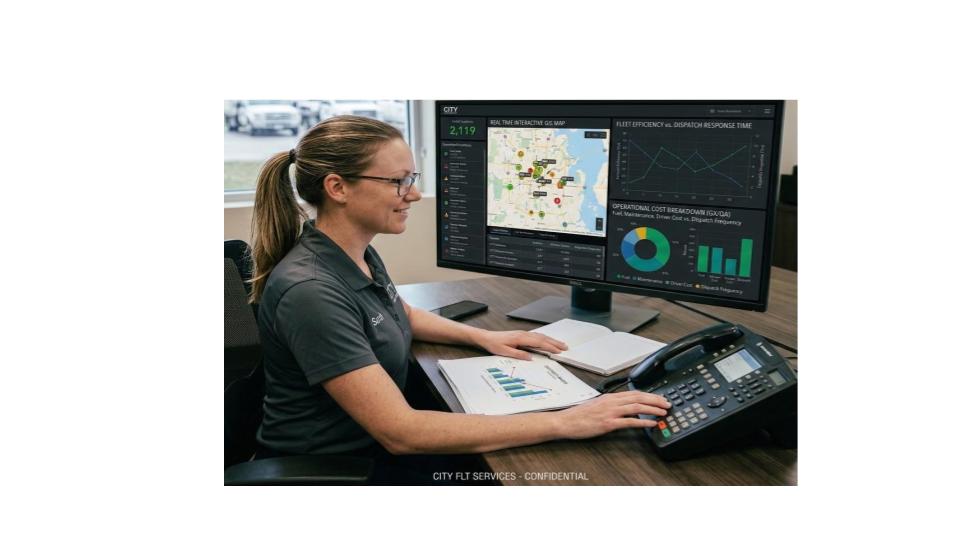
Why cost per tow, cost per mile, and smarter dispatch decisions can make the difference between a busy towing company and a profitable one.
Towing is an expensive business—and it isn’t getting any cheaper.
Trucks cost more. Insurance costs more. Fuel, maintenance, payroll, technology, financing, and equipment all take a bite out of every dollar that comes through the door.
Meanwhile, some of your largest customers—including motor clubs and insurance companies—have sophisticated systems and people dedicated to managing their costs. Their job is to purchase towing and roadside services efficiently.
Your job is different.
Your job is to make sure that when your trucks move, your company has a reasonable opportunity to make money.
That doesn’t mean you need a finance department or a team of analysts. But you do need to understand a few basic numbers—and your dispatchers need enough information to make good decisions.
Two of the most important are:
Revenue required per tow and cost per mile.
Once you understand those numbers, the question “Should we take this call?” becomes much easier to answer.
Start With the Number Every Tow Company Should Know
Let’s look at a fictional company called Unicorn Towing.
The exact numbers aren’t important. What matters is the process.
Suppose Unicorn has these approximate monthly expenses:
| Monthly Expense | Amount |
|---|---|
| Rent | $5,000 |
| Insurance | $20,000 |
| Utilities | $500 |
| Phone/IT | $800 |
| Advertising | $1,500 |
| Payroll | $65,000 |
| Fuel | $6,000 |
| Maintenance | $10,000 |
| Loan payments | $20,000 |
| Total | $128,800 |
Unicorn completes approximately 1,200 tows per month.
Divide $128,800 by 1,200 completed tows and you get:
$107.33 per completed tow.
That’s an extremely important number.
It tells management that Unicorn needs to generate approximately $107 in revenue per completed tow just to cover the expenses in this simplified example.
And that’s not the goal.
That’s the starting line.
The company still needs profit. It needs reserves for replacing trucks and equipment. Ownership needs a return on its investment. There will be unexpected repairs, insurance increases, slow periods, bad debt, and other expenses.
So if Unicorn’s average revenue per tow is $110, management shouldn’t necessarily be celebrating.
They’re dangerously close to the edge.
Your Target Revenue Per Tow
The next step is deciding what you want your average revenue per completed tow to be.
Perhaps your financial analysis says you need $140, $160, or $180 per completed tow to produce the margins you want.
That becomes an operating target.
Your dispatchers don’t need access to your complete financial statements. They don’t need to know what the company pays in rent or what your truck payments are.
But they do need to understand the economics behind the decisions they’re making.
A dispatcher choosing between two calls isn’t simply deciding which truck goes where.
They’re allocating one of your company’s most expensive and limited resources:
truck time.
Then Understand Your Cost Per Mile
The second important number is your cost per mile.
This calculation is more complicated because different trucks have different operating costs.
A light-duty rollback isn’t going to have the same economics as a medium-duty or heavy-duty truck.
You can develop reasonable operating-cost estimates by looking at actual expenses such as fuel, maintenance, tires, repairs and other vehicle-related costs. Depending on how you manage your financials, you may also want to consider depreciation, financing and other ownership costs.
The important thing is consistency.
At a minimum, consider establishing operating-cost assumptions for:
Light-duty, medium-duty, and heavy-duty equipment.
Don’t simply borrow somebody else’s cost-per-mile number.
Your trucks, insurance, drivers, geography, traffic and operating model are different.
For perspective, even the IRS business mileage rate—which is designed for tax purposes and not as a towing-industry cost benchmark—is based on studies of fixed and variable vehicle operating costs. Effective July 1, 2026, the IRS business mileage rate for eligible automobiles is 76 cents per mile.
A commercial tow truck can obviously have very different economics. The point is that miles have a real cost, and ignoring that cost can make a job look much more profitable than it actually is.
To Tow or Not to Tow?
Now we get to the important part.
Once your dispatch team understands your revenue-per-tow target and your operating cost per mile, they can make better decisions.
Imagine you’re offered a $58 tow.
Should you take it?
Maybe.
If the truck is nearby, the job can be completed in 20 minutes, and there’s nothing better for that truck to do, the economics might work.
But what if that same $58 call ties up a truck for an hour?
And what if accepting it causes you to miss a $175 call?
The real cost of the $58 job isn’t just what it costs to perform.
It may also include the opportunity cost of the better job you couldn’t accept.
That’s where dispatch becomes much more than answering phones and assigning trucks.
Dispatch becomes revenue management.
Long-Distance Tows Make the Math Even More Important
Consider another question:
Should I take a truck out of service for four hours to handle a long-distance tow?
A $500 tow sounds great compared with a $100 local tow.
But don’t look only at the invoice.
How many total miles will the truck travel?
How much driver time will the job consume?
What is the truck’s approximate operating cost per mile?
Does the truck return empty?
What other calls are you likely to lose while that truck is unavailable?
A long-distance job may be highly profitable.
Or it may generate an impressive-looking invoice while producing very little actual profit.
You can’t know without doing the math.
Use the Numbers When Negotiating Contracts
These numbers shouldn’t only influence dispatch.
They should also influence which customers you pursue and the rates you negotiate.
When you’re negotiating with motor clubs, insurance companies and other commercial accounts, know what the work actually costs you.
If the economics don’t work at the proposed rate, understand that before you sign the agreement.
Higher-paying accounts can also deserve greater operational priority when your contractual obligations allow it.
Look for opportunities to develop profitable relationships with customers such as fleets, dealerships, private-property accounts, law enforcement agencies and other commercial partners.
The objective isn’t simply to generate the largest possible number of calls.
It’s to build the right mix of profitable work.
Your Dispatcher Can Have a Huge Effect on Profitability
Owners sometimes think about dispatch as an expense.
That’s a mistake.
A strong dispatcher can have an enormous impact on the company’s financial performance.
Consider how many financial decisions your dispatch operation influences every day:
Which calls get accepted?
Which get rejected?
Which truck gets assigned?
How many miles will that truck travel?
How long will it be unavailable?
Which customer gets priority when you’re busy?
Are higher-value calls being handled quickly?
Are drivers being sent across town when another truck is closer?
Are profitable calls being lost because trucks are tied up on marginal work?
Multiply those decisions by hundreds or thousands of calls every month and small improvements can become substantial dollars.
That’s why dispatchers shouldn’t operate only on instinct.
Give them measurable targets.
Measure the Results
Knowing the numbers isn’t enough. You also need to track performance.
Start with a small set of operating metrics:
Average revenue per completed tow.
Revenue by customer or account.
Average loaded and total miles per job.
Truck utilization.
Jobs accepted versus rejected.
Cancellations and GOAs.
Revenue generated per truck-hour.
You don’t need a complicated dashboard containing 50 metrics.
You need a handful of numbers that tell you whether your trucks and dispatch operation are being used profitably.
Then review them regularly.
How Towing Forward Approaches Dispatch
At Towing Forward Company, we believe dispatch should help improve the economics of the entire towing operation.
Our experienced dispatch professionals are supported by AI-assisted technology that helps manage information, communications, workflows and repetitive tasks. The technology supports the dispatcher—it doesn’t replace the judgment required to run a towing operation.
We work with towing companies to understand their priorities, customer requirements and operating targets.
Those priorities can then become part of the dispatch process.
Which accounts matter most?
What jobs should receive priority?
What are your target revenue levels?
Where are trucks being tied up unnecessarily?
What types of calls are producing the best return?
We can report results back to management and continuously refine the process.
The goal isn’t simply to dispatch more calls.
The goal is to help you make better use of every truck, every driver and every call opportunity.
Because at the end of the day, being busy and being profitable aren’t the same thing.
Before you answer “To tow or not to tow?”, know your numbers.
Ready to Put Your Dispatch Operation to Work on Profitability?
Towing Forward Company provides complete towing dispatch services using experienced dispatch professionals enhanced by AI.
Call 760-519-2230 or visit TowingForward.ai to learn more.
Get a free demo here
Powered by people. Enhanced by AI.
Leave a Reply