Category: Uncategorized

  • Outsourced Dispatch vs. In-House for Towing

    Outsourced Dispatch vs. In-House for Towing

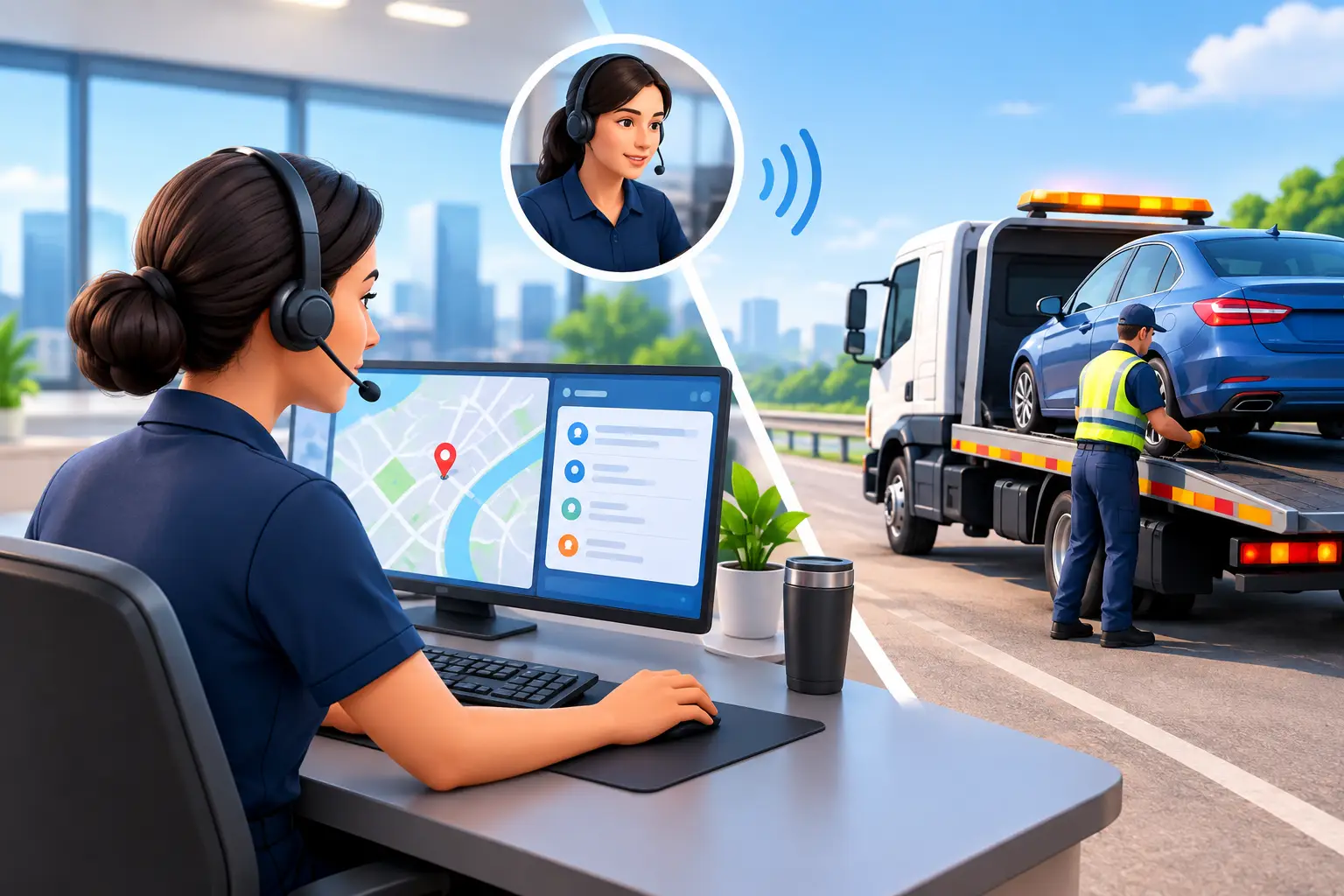
    At 2:13 a.m., the question is not whether your dispatch model looks good on paper. The question is whether the call gets answered, the job gets entered correctly, and the right truck gets moving without delay. That is why outsourced dispatch vs in house is not a theoretical debate for towing companies. It is an operating decision that affects revenue, response times, labor cost, customer experience, and how much control you really have when the phones stay busy after hours.

    For towing operators, dispatch is not just call taking. It is the control center for intake, routing, status updates, driver coordination, impound questions, motor club compliance, and the dozens of edge cases that show up in real towing work. If dispatch is inconsistent, everything downstream gets more expensive.

    Outsourced dispatch vs in house: what actually changes

    The biggest mistake owners make is treating this as a staffing question alone. It is really a systems question. In-house dispatch means you hire, train, schedule, supervise, and retain your own team. Outsourced dispatch means a third-party team handles some or all of that function using defined workflows, routing rules, and software processes.

    On the surface, in-house feels simpler because the people are yours. You can walk into the office, hear calls, and make changes on the fly. That matters. In towing, direct control has real value, especially if your operation handles police rotation, impounds, specialty equipment, or local accounts with very specific expectations.

    But control is not the same as performance. An in-house team can still miss calls, enter incomplete jobs, fail to update statuses, or struggle with nights and weekends. Outsourced dispatch can reduce those failures, but only if the provider understands towing operations at a practical level. Generic answering services do not solve towing dispatch problems. They usually create new ones.

    Where in-house dispatch performs best

    In-house dispatch works well when you have stable call volume, strong supervisors, low turnover, and enough scale to keep coverage consistent across all shifts. If your dispatchers know your drivers, your zones, your accounts, and your escalation rules, that familiarity can produce fast decisions and fewer handoff errors.

    There is also a cultural advantage. Your internal team is immersed in your standards. They hear the same complaints, understand the pressure points, and can adapt quickly when your priorities change. If you are running a high-accountability operation with disciplined processes, in-house dispatch can be a strong asset.

    The problem is that many towing companies are not comparing ideal in-house dispatch to outsourced dispatch. They are comparing outsourced dispatch to a stretched internal setup that depends on one or two key people, inconsistent after-hours coverage, and constant schedule patching. Once that happens, the cost of keeping dispatch internal starts showing up in missed calls, slower job intake, dispatcher burnout, and owner involvement that never really ends.

    Where outsourced dispatch creates leverage

    Outsourced dispatch makes the most sense when your current bottleneck is coverage, consistency, or cost per handled call. If nights, weekends, overflow, and vacation gaps are where performance breaks down, outsourcing can stabilize the operation fast.

    That is especially true in towing because call demand is uneven. You might have quiet periods followed by clustered inbound activity from roadside calls, police requests, status checks, and impound inquiries. Staffing an internal desk for peak availability often means paying for underused labor during slower windows. Outsourced models can absorb that variability better if they are built correctly.

    The leverage comes from standardization. A good outsourced dispatch operation does not rely on one strong employee carrying the load. It runs on defined call flows, account-specific instructions, software discipline, and documented escalation paths. When those pieces are in place, you get more predictable intake and fewer dropped balls.

    That said, outsourcing is not automatically better. If the provider lacks towing-specific training, if they cannot work cleanly inside your software, or if they treat every call like a generic customer service event, you lose speed and accuracy fast. In towing, bad dispatch is expensive within minutes.

    Cost is not just payroll

    Most owners start with wages, taxes, and benefits. That is reasonable, but it is incomplete. The real cost of in-house dispatch includes recruiting, turnover, training time, supervision, schedule coverage, call quality management, and the owner or manager attention required to keep the desk functioning.

    Then there are the hidden losses. A missed after-hours call is not just one missed invoice. It may be a lost motor club job, a damaged account relationship, or a customer who calls the next tower on Google. Slow data entry can delay truck movement. Weak documentation can create billing disputes. A dispatcher who quits with no backup plan can force leadership into emergency coverage overnight.

    Outsourced dispatch changes the cost structure from staffing management to service management. You are paying for coverage and execution rather than building every piece yourself. For many towing companies, that produces a cleaner operating model, especially when overnight and weekend labor are hard to staff.

    But the low-cost option is not always the profitable option. Cheap outsourced call handling that creates rework, confusion, or poor customer experience is not efficient. The right comparison is not hourly wage vs monthly service fee. It is total dispatch cost vs total dispatch performance.

    Control is the real objection, and it is a fair one

    When towing owners resist outsourcing, control is usually the reason. They worry that an outside team will not understand the business, will mishandle high-friction calls, or will make decisions that should stay internal. Those concerns are valid.

    The answer is not blind trust. The answer is process visibility. If an outsourced partner can show exactly how calls are answered, how jobs are created, how routing rules are applied, how escalations happen, and how accountability is maintained, control does not disappear. It gets structured.

    This is where software integration matters. If dispatch activity lives inside the same operational system your team already uses, visibility improves. You can monitor job flow, review notes, see timestamps, and keep the operation aligned without relying on verbal updates. For Towbook users, that level of integration changes the conversation from outsourcing as distance to outsourcing as managed execution.

    The best fit is often a hybrid model

    For many towing businesses, the smartest answer in the outsourced dispatch vs in house decision is not either-or. It is hybrid.

    A hybrid model keeps certain functions internal while outsourcing the pressure points. Your daytime lead dispatcher may stay in-house because they manage key accounts, know local police requirements, and coordinate complex recoveries. After-hours calls, overflow traffic, routine roadside intake, impound inquiries, and first-line call handling can move to an outsourced team built for consistency.

    This approach protects operational control where it matters most while removing the most fragile parts of the staffing model. It also reduces burnout. Internal staff can focus on exception handling and fleet coordination instead of trying to catch every ringing phone.

    For many operators, that is where the ROI shows up first. You do not need to replace your entire dispatch function to get better results. You need to close the gaps that are currently costing you money.

    How to evaluate the right model for your shop

    The decision should come from your workflow, not from a general opinion about outsourcing. Start with your weak points. If your issues are missed calls, overnight coverage, inconsistent data entry, or dispatcher turnover, outsourcing deserves a serious look. If your team is strong during business hours but weak after 6 p.m., a hybrid setup may be the better move.

    Then look at complexity. If your call mix includes motor clubs, private property impounds, police rotation, and roadside assistance, your dispatch model has to handle branching workflows without slowing down. That means scripts alone will not cut it. You need towing-specific judgment and clear routing logic.

    Finally, measure what matters. Track answer rate, time to dispatch, job entry accuracy, after-hours capture, and the number of owner interruptions tied to dispatch issues. Once you look at the numbers, the right model usually becomes clearer.

    A specialized partner like Towing Forward fits this market because the work is not generic call center work. It is towing operations. That distinction matters when a caller is upset, the account has rules, the truck assignment is time-sensitive, and every minute affects margin.

    The best dispatch model is the one that gives you reliable coverage, clean execution, and enough visibility to run the business without babysitting the phones. If your current setup cannot do that consistently, the next step is not hiring faster. It is rebuilding dispatch around performance.


    References:


    To learn more about how missed calls affect customer satisfaction, click here

    To see a short video about Towing forward, click here.
    📅 Or book a quick demo by clicking here

  • How to Outsource Towing Dispatch Right

    How to Outsource Towing Dispatch Right

    At 2:13 a.m., the question is not whether your phones are ringing. The question is whether every call is being answered correctly, entered cleanly, routed fast, and followed through without waking up your whole operation. That is the real reason owners start asking how to outsource towing dispatch. They are not looking for theory. They are trying to stop missed revenue, reduce overnight labor strain, and keep trucks moving without losing control of the business.

    Why towing companies outsource dispatch in the first place

    Most towing companies do not outsource because dispatch is unimportant. They outsource because dispatch is too important to leave exposed to staffing gaps, inconsistent call handling, or after-hours burnout. A missed private property impound call, a badly handled motor club update, or slow data entry on a roadside job can create downstream losses that are bigger than the hourly wage of an in-house dispatcher.

    The pressure points are usually predictable. Nights and weekends are hard to staff. Dispatcher turnover creates training drag. Owners get pulled back onto phones when they should be managing drivers, customers, and cash flow. Even good teams struggle when call volume spikes or when one dispatcher is expected to handle intake, status checks, complaint calls, and data entry at the same time.

    Outsourcing can solve those problems, but only if the service is built for towing. Generic answering services tend to break down on tow-specific details like impound verification, release questions, ETA management, and motor club workflows. The goal is not just answered calls. The goal is operationally correct calls.

    How to outsource towing dispatch without losing control

    The biggest hesitation owners have is valid. If dispatch sits outside your building, will you lose visibility, speed, or accountability? You can, if you outsource the wrong way. The right model gives you more structure, not less.

    Start by defining what dispatch means inside your company. For some fleets, outsourced dispatch only covers after-hours call answering and job intake. For others, it includes full-time call handling, Towbook entry, dispatch coordination, status updates, and overflow support during peak periods. There is no single correct scope. What matters is matching the service to your actual bottlenecks.

    If your biggest leak is overnight missed calls, begin there. If your issue is daytime inconsistency, duplicate entry, and poor queue management, a broader handoff may make more sense. Outsourcing does not have to be all or nothing. In many towing businesses, the strongest setup is hybrid – outside support for coverage and consistency, with internal oversight for escalations, customer exceptions, and local judgment calls.

    What a good outsourced towing dispatch setup includes

    A towing dispatch partner should fit into your operation like an extension of your desk, not a call center script layered on top of it. That means process depth matters more than generic customer service language.

    First, they need towing-specific call logic. A motor club assignment is not handled like a private customer breakdown. A police tow should not follow the same path as a lien inquiry. Impound calls need clear release protocols, not vague message taking. If the provider cannot explain how they separate these scenarios, they are not ready for real dispatch responsibility.

    Second, they need system discipline. If your dispatching lives in Towbook or another platform, jobs should be entered consistently, quickly, and with the right fields populated. Bad data is not a small issue. It slows assignment, creates billing errors, and weakens visibility across the shift.

    Third, they need routing control. Good outsourced dispatch is driven by rules. Which calls get answered live, which drivers or managers get escalated, how after-hours releases are handled, when to send status updates, and what counts as an emergency should all be defined upfront. This is where many transitions succeed or fail.

    Fourth, they need measurable accountability. You should know answer rates, entry times, dispatch turnaround, and exception handling patterns. If the provider cannot show performance at the workflow level, you are buying a black box.

    The handoff process matters more than the sales pitch

    If you are evaluating how to outsource towing dispatch, pay close attention to onboarding. That is where operational quality gets built.

    A serious provider will ask for more than your phone lines and hours of coverage. They should map your service types, normal call volume, fleet structure, service area, pricing sensitivities, impound process, after-hours rules, and escalation chain. They should also review how your current team handles edge cases, because edge cases are where towing dispatch gets expensive.

    The best onboarding process usually includes call flow design, script calibration, routing logic, software access setup, exception protocols, and a test phase. This is not overkill. It is what prevents bad transfers, duplicated calls, and owner frustration in week one.

    A rushed launch often creates the false impression that outsourcing does not work. In reality, poor implementation is usually the problem. If a partner treats onboarding like a formality, expect avoidable mistakes once real calls start coming in.

    When outsourcing works best

    Outsourced dispatch tends to perform especially well in a few situations. One is after-hours coverage, where the cost of missed calls and sleep-disrupted owners is easy to measure. Another is multi-truck growth, where the company has outgrown ad hoc phone handling but is not ready to build a full internal dispatch bench across every shift.

    It also works well for operators who want tighter process consistency. An outsourced team that follows defined routing rules and enters jobs cleanly can outperform a loose internal setup, especially when in-house dispatch depends too heavily on one experienced person.

    That said, not every company should outsource the exact same functions. If your business relies heavily on local municipal relationships or highly customized police rotation handling, you may want to keep some decisions internal. If your operation has strong daytime dispatch but weak nights, partial coverage is probably the better move. Good outsourcing respects what should stay close to management.

    Red flags to watch before you sign

    The first red flag is broad, generic language. If a provider talks about customer service but not release procedures, Towbook workflows, motor club requirements, or tow-status communication, they are probably not built for your environment.

    The second is weak integration. If dispatchers are taking messages outside your system and expecting your team to re-enter everything later, you are not really outsourcing dispatch. You are just adding another layer between the call and the truck.

    The third is no clear escalation map. Towing operations need defined thresholds for when a manager gets involved, when a driver is contacted directly, and when a call requires special handling. Without that structure, outsourced teams either over-escalate and create noise or under-escalate and create risk.

    The fourth is no reporting discipline. You should not have to guess whether service is improving. If answer times, missed call capture, and job handling quality are invisible, performance management becomes impossible.

    Cost is not the only number that matters

    Owners often compare outsourcing to the hourly cost of an in-house dispatcher. That is too narrow. The better comparison is total dispatch performance.

    If outsourcing reduces missed calls, improves overnight coverage, shortens intake time, and keeps jobs moving into your system accurately, the labor comparison changes fast. So does the cost of turnover, training, call inconsistency, and owner interruption. A cheaper internal setup is not cheaper if it leaks revenue and creates dispatch bottlenecks.

    At the same time, the lowest-priced outsourced option is rarely the best one. Towing dispatch requires context, judgment, and software discipline. A low-cost vendor that cannot handle impounds, after-hours complaints, or ETA pressure will create hidden costs that show up in customer friction and lost jobs.

    What to ask before making the switch

    Ask how they handle your actual call types, not hypothetical ones. Ask how they enter and route jobs, how exceptions are managed, and what happens when a caller is angry, confused, or in a high-pressure roadside situation. Ask what the first 30 days look like and how performance is reviewed.

    Also ask what stays under your control. You want a partner that can execute defined workflows while preserving management visibility. That balance matters. The best outsourced dispatch model is not hands-off. It is tightly structured, monitored, and aligned with how your business already wins work.

    For towing companies that want stronger call capture and tighter dispatch execution, a specialized model like Towing Forward makes more sense than a general answering service because it is built around towing-specific call flows, Towbook discipline, and real routing logic.

    Outsourcing dispatch is not about stepping away from operations. It is about building a dispatch function that performs the same way at 2 p.m. and 2 a.m. If you make the move with clear rules, the right systems, and a towing-specific partner, you do not give up control. You finally get it back.


    References:

    To learn about how missed calls affect customer satisfaction, click here

    To see a short video about Towing forward, click here.

    📅 Or book a quick demo by clicking here 

  • Driver ETA Update System That Actually Works

    Driver ETA Update System That Actually Works

    A customer says, “The last dispatcher told me 45 minutes.” Twenty minutes later, they call back asking where the truck is. Your driver got tied up on a winch-out, traffic shifted, and nobody updated the ETA. That gap is exactly where a driver ETA update system earns its keep in a towing operation.

    For towing companies, ETA management is not a nice-to-have feature. It affects call volume, customer trust, motor club performance, dispatcher workload, and whether your fleet feels controlled or chaotic. If your team is still relying on manual check-ins, driver memory, and reactive callbacks, ETA updates are costing more than they look on paper.

    What a driver ETA update system should do

    At a basic level, a driver ETA update system tracks when a truck is expected to arrive and pushes that information to the people who need it. In towing, that usually means dispatch, the customer, the property owner, a motor club, or some mix of all four. The real value is not just showing an ETA on a screen. The value is keeping that ETA current as conditions change.

    That distinction matters. A static ETA created at dispatch is often wrong within minutes. Drivers hit traffic, recoveries run long, addresses are incomplete, police scenes slow access, and stacked calls throw off the whole board. A usable system has to account for real operating conditions, not pretend every job is a straight line from point A to point B.

    For most towing businesses, the right setup combines GPS location data, status updates, dispatch logic, and communication rules. When a driver marks en route, arrives on scene, or gets delayed, the ETA should adjust without forcing dispatchers to chase down the same information by phone all day.

    Why towing companies struggle with ETA accuracy

    The problem usually is not effort. It is workflow.

    Most towing dispatch teams are juggling incoming calls, police requests, roadside jobs, impounds, release questions, and upset customers at the same time. Even strong dispatchers start making rough ETA estimates when they do not have reliable live visibility. Drivers are busy too. They are hooking vehicles, dealing with customers, waiting on paperwork, and trying to clear the next call. Asking them to stop and manually report every shift in timing is not realistic at scale.

    That is why ETA drift becomes normal. The original quote gets entered. The real-world conditions change. Nobody updates the timeline fast enough. Then the phones light up.

    In a small shop, that might mean a few extra calls per shift. In a multi-truck operation handling motor club volume or after-hours roadside work, it turns into a measurable cost. Dispatchers spend time answering status checks instead of moving jobs. Customers lose confidence. Service partners think your shop is slower than it really is. Drivers feel pressure from people asking for updates they cannot safely provide while driving.

    The operational payoff of a better driver ETA update system

    A better driver ETA update system reduces friction across the board, but the biggest gains show up in three places: visibility, call reduction, and control.

    Visibility matters because dispatch decisions are only as good as the board in front of you. If your ETA data is stale, your next assignment is more likely to be wrong. You may overpromise one customer while leaving a better-positioned truck underused. You may also miss early warning signs that a job is slipping and needs intervention.

    Call reduction is the most immediate win. When dispatch has current ETAs and customers receive accurate updates, the volume of inbound “where is the driver” calls drops. That matters during peak periods and matters even more overnight, when one delayed update can consume a large share of your available coverage.

    Control is the longer-term advantage. When ETA updates are consistent, managers can see which delays come from traffic, which come from dispatch overload, which come from weak route planning, and which come from driver habits. That is how an ETA process stops being customer service theater and becomes a management tool.

    What good ETA updates look like in real towing workflows

    In towing, ETA logic needs to be tied to job status, not just map distance.

    If a truck is assigned but still clearing a prior call, the system should not present that unit like it is immediately available. If a driver is on scene but waiting for a police release or a customer to hand over keys, the ETA to the next job cannot be treated as fixed. If an address is in a rural service area or behind a gated lot, expected arrival needs a buffer that reflects actual field conditions.

    That is why generic fleet tracking tools often disappoint towing operators. They can show dots on a map, but that is not the same as dispatch-ready ETA intelligence. Towing needs status-aware updates tied to the realities of roadside assistance, recoveries, impounds, and stacked jobs.

    The strongest setup usually includes automatic location tracking, structured status changes, and rules for when customers or partners get updated. Not every ETA change should trigger outreach. Too many notifications create noise. Too few create silence. The right balance depends on your call mix and who is asking for the update.

    Where automation helps and where human dispatch still matters

    ETA updates are a good place for automation because much of the work is repetitive. If a truck changes location, if a status changes, or if a delay passes a defined threshold, the system can adjust timing and notify the right party faster than a busy dispatcher can.

    But towing operations should be careful about treating ETA as a fully automatic problem. It is not.

    A map may show a truck ten minutes away while the driver is blocked by scene conditions, waiting on a rotation release, or loading a vehicle in a position that adds another twenty minutes. An automated estimate without operational context can make the situation worse by sounding precise while being wrong.

    That is why the best model is usually hybrid. Let automation handle the predictable pieces – location pulls, status triggers, update timing, and routine communications. Keep human dispatch involved where judgment matters – triage, exceptions, customer handling, and reprioritization when the board changes.

    This is where towing-specific dispatch support becomes more valuable than a generic software layer. A trained team that understands motor club timing, police rotation realities, and after-hours roadside pressure can interpret ETA data correctly instead of just repeating what the screen says.

    How to evaluate a driver ETA update system

    If you are considering a driver ETA update system, do not start with the dashboard. Start with the workflow.

    Ask how the ETA is created, what data feeds it, how often it changes, and what triggers an update. Ask whether the system understands job status or only vehicle location. Ask how it handles reassignment, stacked calls, delayed clears, and bad address data. Those are the situations that expose weak systems fast.

    Integration matters too. If your team works inside Towbook or another dispatch platform, ETA updates need to fit the existing process. A separate tool that forces dispatchers to jump between screens can create just as much drag as it removes. The goal is faster visibility and cleaner communication, not another login that only gets used when someone remembers.

    You should also evaluate customer communication rules. Some operations need text-based ETA updates for roadside customers. Others care more about giving internal dispatchers a reliable live view. Motor club-heavy shops may need both, plus documented status timing for partner accountability. There is no single right configuration. It depends on who you serve and how your jobs flow.

    Signs your current process is failing

    You do not need a formal audit to know ETA management is off. The signs show up in the day-to-day operation.

    If customers regularly call back for arrival checks, your updates are not trusted. If dispatchers spend large parts of the shift chasing drivers for location, visibility is weak. If drivers complain that estimated arrival times are unrealistic before they even accept the job, your dispatch logic is probably disconnected from field reality. If managers cannot explain why certain shifts always run late, you have a data problem as much as a staffing problem.

    Many towing companies accept these issues as normal because they are common. Common does not mean efficient. A sloppy ETA process quietly increases labor load, frustrates customers, and makes your operation look less reliable than it is.

    The real standard is fewer surprises

    A driver ETA update system is not valuable because it produces perfect timestamps. In towing, perfect is not realistic. Scenes change, customers disappear, roads back up, and priority calls interrupt the whole plan.

    The real standard is fewer surprises.

    When dispatch can see delays early, when customers get updated before they feel ignored, and when drivers are not carrying the full burden of manual status reporting, the operation gets calmer and more profitable at the same time. That is what good ETA management should do. Not create more technology to babysit, but give your team better control over what is already happening.

    For towing companies trying to tighten dispatch performance, this is one of the clearest places to improve. Better ETA updates do not just protect customer experience. They protect dispatcher time, fleet utilization, and your ability to scale without letting communication breakdowns eat the margin.

    Schedule a Free Dispatch Assessment

    Click here and we’ll review your current operation and show you:

    • Where calls may be getting missed
    • How outsourced dispatch fits into your workflow
    • How our AI-assisted dispatch process works
    • How other towing companies are increasing revenue without increasing payroll

    References:

    To learn about how top manage missed calls, click here

    To see a short video about Towing forward, click here.

    📅 Or book a quick demo by clicking here 

  • Towing Complaint Call Handling That Works

    Towing Complaint Call Handling That Works

    A complaint call rarely starts as a simple customer service issue. In towing, it often lands when a vehicle owner is already angry, confused, late, or convinced your company made a mistake. That means towing complaint call handling is not just about being polite. It is an operational function that affects liability, online reputation, staff time, municipal relationships, and whether your dispatch board stays under control.

    For most towing companies, complaint calls become expensive when they are handled inconsistently. One dispatcher gives too much information, another argues, a third forgets to log the details, and the overnight phone gets routed to someone who has no context at all. The result is predictable – more escalation, slower resolution, and more internal cleanup the next day.

    Why towing complaint call handling breaks down

    The biggest problem is that complaint calls sit in an awkward space between dispatch, customer service, and risk management. They are not the same as a new roadside request, and they should not be treated like one. But in many shops, the same person answering driver ETAs and police rotation calls is also expected to de-escalate impound disputes, fee complaints, damage allegations, and storage questions.

    That only works if the process is clear.

    Without a structured complaint workflow, calls depend too heavily on whoever happened to answer. Some employees are calm under pressure. Others get defensive when accused. Some know exactly what can be said about an impounded vehicle or a motor club delay. Others improvise. Improvisation is where operational risk starts.

    Volume also matters. A five-truck company may only deal with a handful of true complaint calls each week, but if those calls hit during peak dispatch periods, they still drag down response times. A larger fleet with impounds, private property towing, and after-hours recovery work may face complaint traffic every day. In both cases, the issue is less about total call count and more about interruption cost.

    What good towing complaint call handling actually does

    Strong complaint handling creates control at the moment your operation is most likely to lose it. The goal is not to win an argument on the phone. The goal is to capture the facts, keep the caller from escalating unnecessarily, follow the right policy path, and protect dispatch capacity.

    That requires a call flow built for towing realities.

    A good handler first identifies the complaint type. There is a major difference between a caller asking why their car was towed, a customer disputing charges, a motorist claiming vehicle damage, and a property manager upset about response time. Each needs different language, different documentation, and in some cases different routing.

    Next comes verification. Complaint calls should be tied quickly to a job, plate, impound record, driver note, or Towbook entry. If the handler cannot anchor the complaint to an actual record, the call will usually spiral into argument because neither side is working from the same information.

    Then comes controlled communication. That means the person answering knows what to confirm, what to avoid speculating on, and when to move the issue to a supervisor or claims process. In towing, overexplaining is often just as damaging as saying too little.

    Finally, the call must produce a documented outcome. If the conversation ends without notes, category tags, promised follow-up, and ownership assigned, the complaint is not resolved. It is simply delayed.

    The complaint types that need different handling paths

    Not every upset caller is the same, and treating all complaints with one script creates more friction. The highest-performing operations separate complaint handling into specific categories and train to those scenarios.

    Impound complaints usually center on location, release requirements, fees, hold status, or perceived illegality of the tow. These calls need fast verification and careful communication. The wrong phrasing can create unnecessary conflict or expose your staff to accusations they are not equipped to debate.

    Service complaints tend to involve ETA frustration, no-show claims, billing disputes, or poor roadside experience. These often move faster because the underlying job is easier to locate, but they still need structure. If the caller says a driver was rude or late, the handler should document exact details instead of arguing over memory.

    Damage allegations need a tighter chain of communication. Front-line call handlers should gather facts, avoid admissions, and move the issue into the company’s documented review or claims pathway. The purpose is not to stonewall the customer. It is to protect accuracy.

    Motor club complaints add another layer because there may be external service standards, timestamps, and partner expectations involved. In those cases, complaint handling affects not just the customer but the account relationship.

    How to build a complaint process that protects dispatch

    The simplest way to improve towing complaint call handling is to stop treating it like overflow conversation. It needs its own workflow.

    Start with call categorization. As soon as a complaint is identified, the handler should assign a specific type and severity. A storage-hours question is not the same as a police-referred impound dispute or a damage claim. When complaint categories are standardized, reporting becomes possible and coaching becomes easier.

    After that, define response rules. Some complaints can be answered on the first call if the record is clear and the policy is straightforward. Others should be escalated immediately to management, claims, or a designated supervisor. This is where many shops lose control. If escalation rules only exist in someone’s head, they will not hold up across shifts.

    Documentation has to be immediate, not optional. Notes should capture who called, what they claimed, what record was referenced, what was communicated, and what follow-up was promised. If your workflow is integrated with Towbook or another dispatch system, that documentation should live where the job history lives. Fragmented notes in text messages, sticky pads, and inboxes create rework and exposure.

    It also helps to separate resolution from intake. The person answering the phone does not always need to be the person who settles the issue. In fact, for many fleets, that separation improves consistency. Intake is about collecting clean information, controlling the call, and routing it correctly. Resolution is about review and decision-making.

    Scripts help, but only if they reflect real towing scenarios

    A generic customer service script is usually a bad fit for towing. It sounds polished, but it fails under pressure because the caller is not asking for retail support. They want answers about a towed vehicle, a charge they disagree with, or an event they believe harmed them.

    What works better is structured language with controlled flexibility. The handler should know how to acknowledge frustration without accepting blame, how to verify facts without sounding evasive, and how to explain the next step without overpromising. The difference is small on paper and huge in practice.

    This is also where industry-specific training matters. A complaint call tied to impounds, police rotation, storage procedures, private property authorization, or motor club service should not be handled by someone learning the towing business in real time. Speed matters, but correct language matters just as much.

    Why after-hours complaint handling deserves special attention

    Night and weekend complaints are where a lot of towing operations lose consistency. The phones are covered, but not always by someone trained for escalation-heavy calls. Maybe an on-call owner picks up. Maybe a dispatcher handles it while juggling active jobs. Maybe the call rolls to voicemail and gets returned after the customer has already posted online or contacted a municipality.

    That is why after-hours complaint handling should be treated as an operational coverage issue, not just a staffing inconvenience. The process needs the same routing rules, note discipline, and escalation thresholds at 2:00 a.m. that it has at 2:00 p.m.

    For many companies, a hybrid model works best. Routine complaint intake can be handled immediately with trained call staff and documented workflows, while high-risk issues are escalated to management according to defined rules. That keeps calls answered without forcing every overnight agent to make judgment calls above their level.

    This is one reason specialized partners like Towing Forward can create value beyond simple answer rates. In complaint handling, the gain is not just fewer missed calls. It is better control over what gets said, what gets documented, and what reaches management already organized.

    The metric most shops miss

    A lot of companies measure complaint handling by whether the caller calmed down. That is understandable, but it is incomplete. The better metric is whether the complaint moved through the right workflow with minimal operational drag.

    If a dispatcher spent 18 minutes arguing with a caller and still failed to log the issue, that was not a successful call, even if the caller eventually hung up. If a trained handler captured the facts in four minutes, linked the issue to the correct job, and routed it to the right person, that is a better operational result even if final resolution comes later.

    The real payoff is cumulative. Better complaint handling reduces repeat calls, lowers manager interruption, improves record quality, and protects your active dispatch team from getting buried in emotionally loaded conversations. Over time, that means better phone coverage, cleaner job histories, and fewer avoidable escalations.

    Complaint calls are part of towing. They are not going away. But they do not have to keep hijacking your dispatch operation. When towing complaint call handling is built as a defined process instead of a personality test, the phones get calmer, the team gets sharper, and the business stays in control.

    To see a short video about Towing forward, click here.
    📅 Or book a quick demo by clicking here

  • Overnight Dispatch for Tow Companies

    Overnight Dispatch for Tow Companies

    At 2:17 a.m., the problem usually is not call volume. It is what happens when one impound release, one motor club call, one police rotation request, and one angry customer all hit at once while your night coverage is thin. That is where overnight dispatch for tow companies stops being a staffing question and becomes an operational control issue.

    Most towing businesses do not lose money overnight because the phones are always ringing. They lose money because after-hours work is inconsistent, high-stakes, and easy to mishandle. A missed call can mean a lost tow. A slow intake can mean a late arrival. Bad data entry can create billing problems, customer complaints, and headaches for the morning shift. If your overnight process depends on one tired dispatcher, an owner answering calls from home, or a driver juggling both driving and intake, the risk is not theoretical. It shows up in margins, response times, and customer retention.

    References

    To see a short video about Towing forward, click here.
    📅 Or book a quick demo by clicking here


    Why overnight dispatch gets expensive fast

    Overnight coverage looks simple from the outside. Keep the phones on, dispatch the driver, and get through the night. In practice, the cost comes from inconsistency.

    Some nights are quiet enough that a full in-house overnight dispatcher feels underused. Other nights turn chaotic without warning. That creates a bad staffing equation. If you overstaff, labor costs climb and the shift may not justify itself. If you understaff, missed calls and poor call handling erase revenue faster than most owners realize.

    There is also the experience gap. Overnight calls are not easier calls. They often include intoxicated customers, law enforcement requests, accident scenes, locked impound yards, complaint calls, and motor club jobs with strict data requirements. A generic answering service usually cannot manage those situations well. A general virtual receptionist may answer the phone, but if they cannot verify the right details, route the call correctly, and move the job into the dispatch workflow without friction, you still own the operational damage.

    That is why overnight dispatch for tow companies needs to be measured by outcomes, not just phone coverage. Did the call get answered? Was the job qualified correctly? Did the right driver get dispatched fast? Did the information land in the right place for billing, compliance, and follow-up? If any of those fail, the cost of “coverage” is misleading.

    What good overnight dispatch for tow companies actually does

    A strong overnight dispatch function does more than prevent voicemail. It creates consistency when your internal oversight is lowest.

    That starts with call handling. Every after-hours call needs a defined path based on call type, geography, service line, customer category, and urgency. Police rotation should not follow the same workflow as a private property impound question. A motor club call should not be handled like a cash roadside request. Complaint calls need a different tone and escalation path than a simple tire change.

    From there, dispatch quality depends on speed and structure. The caller should not have to repeat everything twice. The dispatcher should know what details are required for the job type. Driver notifications should follow the right order. If a primary unit is unavailable, backup routing should already be defined. If the job belongs in Towbook, entry should be standardized so the morning team is not cleaning up incomplete tickets.

    The best overnight systems also protect management time. Owners should not be the default overflow plan every time a call gets complicated. Exceptions should escalate only when they actually require management judgment. Everything else should follow rules that have already been set.

    Where most after-hours setups break down

    The weak point is rarely the phone itself. It is the handoff between answering and action.

    A common setup is forwarding calls to a driver after hours. It feels efficient because there is no added payroll. But drivers are not sitting at a desk. They are fueling, hooking, unloading, dealing with law enforcement, or sleeping between jobs. Even when they answer, intake quality suffers because they are trying to work and collect details at the same time.

    Another common setup is using office staff to rotate nights. That can work for a while, but it usually creates burnout, inconsistency, and turnover. Overnight dispatch requires a different cadence than daytime admin work. It is reactive, interruption-heavy, and often stressful because the margin for error is smaller.

    Then there is the generic call center model. It solves availability but often misses context. If the person answering does not understand release procedures, storage issues, scene priorities, service areas, or motor club expectations, they become a message-taking layer instead of a dispatch function. That slows everything down and forces your team to redo work.

    The hybrid model makes more sense after hours

    For many towing companies, the best overnight model is a hybrid one: automation for speed and consistency, backed by towing-specific human support for judgment calls and exceptions.

    That matters because overnight call handling has two competing demands. First, calls need to be answered immediately. Second, not every call fits a script. Some require clarification, de-escalation, or a routing decision based on your company rules.

    An AI-supported intake layer can capture the call, identify the service type, collect required details, and trigger the right workflow quickly. But the value only holds if the system is built around towing operations, not generic contact center logic. It needs to know what makes a call dispatchable, what needs escalation, and how your actual business handles after-hours scenarios.

    Human-supported dispatch still matters because towing is full of edge cases. A customer may not know their location. A vehicle may be blocked inside a garage. A police call may require immediate verification. An impound caller may be upset and confused. The right model uses automation to remove delay and repetitive intake work, while keeping experienced dispatch judgment available when the call demands it.

    That is where a specialized partner has a real advantage. Towing Forward, for example, is built around towing-specific workflows rather than generic after-hours answering. That distinction matters more overnight than at any other time of day.

    How to evaluate overnight dispatch without guessing

    If you are considering a change, do not start with the question, “Do we need help answering the phones?” Start with where revenue and control are slipping after hours.

    Look at missed calls first. Not just total volume, but what kind of calls are being missed and when. Then look at call-to-dispatch time. If your phones are being answered but jobs still sit too long before assignment, your issue is workflow, not availability.

    Next, review ticket quality. Are after-hours jobs entered consistently? Are required fields completed? Is the morning team correcting notes, updating billing data, or calling customers back to fill gaps? Cleanup work is a hidden cost that makes a weak overnight setup look cheaper than it is.

    You should also check escalation noise. How often is ownership getting pulled into routine issues? How often are drivers calling back for missing details? A good overnight dispatch process reduces interruptions for everyone except when a true exception occurs.

    Finally, compare labor cost against captured revenue, not just headcount. A lower-cost overnight setup that misses two motor club calls, mishandles one police request, and creates four problem tickets may be more expensive than a higher-quality model with tighter controls.

    What implementation should look like

    A workable overnight dispatch transition is not just turning on call forwarding. It should start with routing rules, call types, service areas, escalation logic, and software workflow.

    That means defining who handles what, what information is required by job type, how priority jobs are identified, when management gets involved, and how data enters your dispatch system. If you use Towbook, consistency here matters because after-hours sloppiness turns into day-shift rework very quickly.

    It also means acknowledging trade-offs. Some companies need full overnight dispatch replacement. Others only need overflow coverage, weekend nights, or support during staffing gaps. Some want every call live-answered with immediate job creation. Others want certain call types screened or escalated differently. The right setup depends on your call mix, truck count, geography, and how much standardization already exists in your operation.

    What should not vary is accountability. You should know how calls are being handled, how jobs are being routed, and where failures are occurring if they happen. Overnight dispatch should give you more visibility, not less.

    The towing companies that get after-hours right are not necessarily the biggest. They are the ones that stop treating overnight as a side shift and start treating it as a controlled operating window. When your phones are covered, your workflows are defined, and your dispatch logic still holds at 3 a.m., the night shift stops draining margin and starts producing cleaner, more reliable revenue. That is usually the point where overnight stops feeling unpredictable and starts feeling manageable.

  • Towing Dispatch Workflow Automation That Pays

    Towing Dispatch Workflow Automation That Pays

    At 2:13 a.m., the problem usually is not call volume. It is what happens in the first 90 seconds after the phone rings. A motor club call comes in, the customer is stressed, the dispatcher is juggling another job, and key details never make it into the system cleanly. That is where towing dispatch workflow automation starts to matter – not as a tech trend, but as a way to stop revenue leaks, reduce response delays, and keep the board moving when staffing is thin.

    For towing operators, automation only works if it matches the way a real dispatch desk runs. Generic call center software will not help much with impounds, roadside triage, after-hours overflow, complaint handling, and Towbook data entry. The value comes from automating the repetitive parts of the workflow while keeping the exceptions visible and controlled.

    What towing dispatch workflow automation actually means

    In practical terms, towing dispatch workflow automation is the structured movement of a job from inbound call to assigned truck with fewer manual handoffs, fewer missed steps, and better system visibility. It includes call answering, caller identification, intake logic, service categorization, Towbook entry, dispatch routing, status updates, and escalation rules.

    That definition matters because many operators hear “automation” and think it means replacing the dispatcher. In towing, that is usually the wrong frame. The better model is controlled automation. Repetitive tasks get standardized. Time-sensitive data gets captured faster. Human dispatchers stay focused on judgment calls, exceptions, customer issues, and active fleet management.

    If your dispatcher still has to answer every call from scratch, ask the same intake questions, manually retype customer details, and decide where every job should go without routing support, you do not have a staffing problem alone. You have a workflow problem.

    Where manual dispatch breaks down

    Most towing companies do not lose money because the team is lazy or careless. They lose money because the process depends too heavily on whoever happens to be on shift. One dispatcher asks for exact location details. Another forgets. One enters jobs into Towbook immediately. Another waits until the call queue slows down. Overnight, that inconsistency gets worse.

    The weak points are predictable. Missed calls after hours. Slow intake during peak volume. Incomplete notes on police impounds. Delayed truck assignment because the job is sitting in text messages or handwritten notes instead of the dispatch system. Duplicate effort when office staff has to clean up bad entries the next morning.

    These failures are expensive because they stack. A missed call is lost revenue. A sloppy intake creates longer cycle times. Delayed dispatch hurts ETAs and customer satisfaction. Inconsistent records create billing issues and operator frustration. When owners talk about dispatch feeling chaotic, this is usually what they mean.

    The workflows worth automating first

    Not every process should be automated at the same level. The best returns usually come from the highest-volume and most repeatable workflows.

    After-hours call handling is a strong example. If inbound calls can be answered immediately, routed through towing-specific intake logic, and turned into a structured job record, you remove one of the most common sources of missed revenue. The same applies to standard roadside assistance calls where the required information is known in advance – breakdown type, location, vehicle details, callback number, and urgency.

    Motor club and cash calls also benefit from standardization, but they are not identical. Motor club workflows depend on compliance, timestamps, and often precise note capture. Cash calls may require faster quoting and clearer service expectation setting. Impounds are another category entirely. They need tighter validation, more careful information handling, and stronger escalation rules. Good automation does not flatten those differences. It reflects them.

    How Towbook changes the equation

    For fleets already running Towbook, workflow discipline matters more than adding another software layer. The issue is rarely access to a platform. It is whether calls enter the system cleanly, consistently, and fast enough to support dispatch decisions.

    Towbook-integrated automation improves performance when it handles the handoff between the phone and the board. Instead of relying on a dispatcher to capture every field manually while juggling multiple conversations, the workflow can structure the intake, push the right information into the job record, and apply routing rules based on job type, geography, customer source, or time of day.

    That creates two operational advantages. First, your dispatch team works from a cleaner queue with less rework. Second, management gets better visibility because jobs are not trapped in side conversations or temporary notes. If a company says it has Towbook but still struggles with response speed, the problem is often not the platform. It is the workflow feeding it.

    Automation without losing control

    This is where some owners hesitate, and fairly so. Full automation sounds efficient until a bad intake, a wrong dispatch, or a mishandled complaint costs you a customer or a contract. In towing, control matters as much as speed.

    The answer is not to avoid automation. It is to apply it with rules, thresholds, and human oversight. A standard roadside call can move through a highly automated path. A police-related inquiry, upset customer call, or unusual heavy-duty request may need immediate human review. The goal is not to force every call into the same system logic. The goal is to separate routine work from decision-heavy work.

    That is also why hybrid models tend to perform better than pure self-service automation. AI-supported call handling can answer instantly, collect information, and keep call capture high. Human dispatch expertise remains critical for edge cases, escalation, and operational judgment. For most towing companies, that combination is more realistic than trying to automate the entire desk end to end.

    What good implementation looks like

    The first sign of a strong setup is custom routing. Calls should not all land in the same bucket. They should move based on service type, customer source, territory, shift coverage, and urgency. A motor club call at noon should not follow the same path as an impound release question at midnight.

    The second sign is structured intake. Good automation asks the right questions in the right order and captures them consistently. This cuts down on repeat calls, bad address data, and truck misassignment. It also improves accountability because every job starts with a clearer record.

    The third sign is measurable exception handling. You need clear rules for when the workflow continues automatically and when it hands off to a trained dispatcher. If every exception becomes a manual fire drill, the process is not automated enough. If no exceptions are surfaced, the process is too rigid.

    A practical rollout usually starts with one or two pain points, not a total rebuild. After-hours coverage is often the cleanest place to begin because the ROI is visible fast. From there, many operators expand into overflow handling, standardized roadside intake, or Towbook entry support. That staged approach lowers risk and makes adoption easier for the team.

    The ROI is operational before it is technological

    Owners do not buy towing dispatch workflow automation because they want more software. They buy it because missed calls cost money, dispatcher turnover is expensive, and overnight staffing is hard to stabilize.

    The strongest returns usually show up in four places: higher call capture, lower labor pressure, faster job creation, and better dispatch consistency. There can also be softer gains that matter just as much, like fewer customer complaints, less morning cleanup, and more confidence that the business is not losing work when the office is stretched.

    That said, automation is not magic. If your dispatch rules are unclear, your service area is poorly defined, or your team does not agree on intake standards, technology will expose that weakness rather than fix it. The operators who get the best results are the ones willing to tighten process discipline first and then automate around it.

    For towing companies serious about margin, response speed, and control, workflow automation is no longer a nice add-on. It is part of running a modern dispatch operation. The real question is not whether to automate. It is which parts of your workflow are costing you the most today, and how quickly you want that fixed.

    References:

    To learn more about workflows. click here

    To see a short video about Towing forward, click here.
    📅 Or book a quick demo by clicking here


  • Tow Truck Dispatcher Service That Scales

    Tow Truck Dispatcher Service That Scales

    At 2:13 a.m., the problem usually is not truck availability. It is call handling. A motor club request comes in, a private property impound question follows, then a stranded customer calls back for an ETA, and suddenly one missed handoff turns into lost revenue, delayed dispatch, or an avoidable complaint. That is where a tow truck dispatcher service starts to matter – not as a nice extra, but as a control point for the whole operation.

    For towing companies, dispatch is not just answering phones. It is job qualification, urgency triage, routing, customer communication, software accuracy, and status visibility across the fleet. If any of those break down, margins get squeezed fast. The right dispatch model protects revenue, reduces chaos, and gives operators a cleaner way to grow without piling more pressure onto owners, drivers, or office staff.

    What a tow truck dispatcher service actually does

    A true tow truck dispatcher service is more than a call center. It has to understand how towing work actually moves. That means collecting the right details on the first call, recognizing the difference between a cash tow and a motor club assignment, handling impound-related questions correctly, and getting jobs entered and routed without creating downstream cleanup.

    In practical terms, dispatch sits at the center of four outcomes. First, it captures inbound demand so calls do not die in voicemail or ring unanswered after hours. Second, it standardizes intake so your team gets complete job information instead of fragmented notes. Third, it speeds assignment by applying routing rules and workflow discipline. Fourth, it keeps customers, property managers, and partners informed enough to reduce repeat calls.

    That last point gets overlooked. Many towing businesses think dispatch costs are mostly labor costs. They are not. Bad dispatch also creates hidden costs through duplicate calls, longer cycle times, driver confusion, charge disputes, and admin rework.

    Why in-house dispatch breaks under pressure

    Most towing operators do not struggle because they lack effort. They struggle because dispatch volume is uneven, staffing is hard, and the work requires too much context to be handled casually. One strong dispatcher can hold the line during normal hours, but nights, weekends, overflow periods, and turnover expose every weak spot at once.

    The typical failure pattern is predictable. Calls stack up. Intake gets rushed. Information gets missed. Drivers call back for missing details. Customers call back for updates. The owner gets dragged into routine coordination instead of managing the business. If the company is using software like Towbook but data entry is inconsistent, visibility gets worse, not better.

    This is why many operators reach a point where they need a different model, not just another hire. Adding one more dispatcher can help, but only if the issue is simple capacity. Often it is not. The deeper issue is coverage consistency, process discipline, and the ability to handle multiple call types without losing control.

    The best tow truck dispatcher service is built for towing, not generic answering

    A generic answering service can pick up the phone. That does not mean it can dispatch towing work correctly. Towing has too many job types, too many edge cases, and too much operational urgency for a generalist model to work well for long.

    A towing-specific dispatch team understands the difference between roadside and recovery, knows how motor club workflows affect call handling, and can follow custom rules for service areas, truck types, pricing prompts, and escalation paths. It also knows that after-hours calls are not all equal. Some need immediate dispatch. Some need structured intake and scheduling. Some are mostly information requests that still need to be handled professionally to protect your reputation.

    That specialization matters because every bad handoff creates friction. If a caller has to repeat themselves, if the truck sent is wrong for the job, or if Towbook gets incomplete information, the business pays for that mistake later.

    Where AI helps and where it does not

    AI has real value in dispatch, but only when it is used with discipline. The strongest use case is always-on call capture and structured intake. AI can answer immediately, collect core information, follow approved call flows, and make sure routine demand does not fall through the cracks. That is especially useful after hours, during lunch gaps, during overflow periods, or when internal staff is already tied up.

    But towing is not fully scriptable. There are escalations, emotional callers, unclear locations, law enforcement interactions, complaint situations, and exceptions that require judgment. That is why a hybrid model tends to outperform either extreme. Pure automation can feel brittle when real-world variance shows up. Pure human dispatch is harder to staff consistently and usually more expensive to maintain across all hours.

    The better approach combines AI speed with towing-specific human support. AI handles immediate answer rates and standardized intake. Trained dispatchers handle exceptions, judgment calls, routing issues, and process oversight. That gives operators two things they rarely get together: efficiency and control.

    How dispatch quality affects profitability

    Owners usually notice dispatch problems through stress first, but the real issue is financial. A poor dispatch process erodes margin in small ways all day long. Missed calls are the obvious loss. Less obvious are slow call handling, weak routing, inaccurate job entry, and unnecessary callbacks.

    A strong dispatch operation improves profitability by increasing call capture, reducing labor waste, and tightening fleet responsiveness. If jobs are entered correctly the first time and assigned faster, trucks spend less time idle and drivers spend less time chasing missing information. If customers get better updates, your office handles fewer status calls. If after-hours coverage is consistent, you stop losing work just because no one was available to answer.

    There is also a management benefit that matters more as fleets grow. Good dispatch creates visibility. When call flows, timestamps, and routing rules are consistent, it becomes easier to see where delays are happening and fix them. Without that structure, every operational problem looks random even when it is not.

    What to look for in a tow truck dispatcher service

    The first test is industry competence. If the provider cannot speak confidently about impounds, roadside, motor clubs, after-hours calls, ETA updates, and software workflows, they are not ready to run your front line.

    The second test is process control. You want clear intake standards, routing rules, escalation paths, and accountability for how jobs move from phone call to dispatch status. A service should not just answer calls. It should fit into your operation in a way that improves consistency.

    The third test is software integration. For companies using Towbook, this is a major dividing line. If dispatch activity lives outside your system, your team ends up managing around the service instead of benefiting from it. Integration matters because speed without data accuracy is not real efficiency.

    The fourth test is coverage design. Some operators need full dispatch replacement. Others only need nights, weekends, overflow, or backup support during staffing gaps. A good partner can match the service model to the business instead of forcing a one-size-fits-all package.

    Implementation matters as much as the service itself

    Even the best dispatch partner can fail if onboarding is loose. Towing workflows depend on local rules, service areas, pricing boundaries, customer types, truck capabilities, and preferred escalation contacts. Those details need to be documented and tested before full rollout.

    This is where serious providers separate themselves. They map your call types, define routing logic, establish handling rules, and build workflows around how your operation actually runs. That upfront work is what turns outsourced dispatch from a coverage patch into a measurable operational improvement.

    For many towing companies, the goal is not to remove internal control. It is to stop relying on ad hoc dispatch habits that create expensive inconsistency. A well-built outsourced model should give you more visibility, not less.

    One example of this approach is Towing Forward, which combines AI-powered call answering with towing-specific dispatch support and Towbook-centered workflow execution. That matters because the real value is not just answering faster. It is turning calls into usable jobs with less friction and better oversight.

    When outsourcing dispatch makes sense

    It usually makes sense earlier than owners think. If after-hours calls are being missed, if dispatcher turnover keeps resetting training, if the owner is still acting as backup dispatch, or if software usage is inconsistent, the business is already paying a price.

    That does not mean every company should fully outsource tomorrow. Some teams only need overnight coverage. Some need overflow support during peak periods. Some need a hybrid structure where in-house staff handles core daytime dispatch and an external team covers the rest. It depends on volume, staffing stability, and how much process discipline already exists.

    The key question is simple: does your current dispatch setup reliably capture demand, move jobs accurately, and give you operational control across all hours? If the answer is no, then dispatch is not just an admin problem. It is a growth constraint.

    The towing companies that get ahead are usually not the ones with the most trucks. They are the ones that remove friction from the point where every job begins. Get dispatch under control, and the rest of the operation gets easier to scale.

    To learn more about scaling your towing business, click here

    To see a short video about Towing forward, click here.
    📅 Or book a quick demo by clicking here

  • What We Learned -AI Towing Dispatch &  Handling 120,000 Towing Calls Per Month

    What We Learned -AI Towing Dispatch & Handling 120,000 Towing Calls Per Month

    Towing Dispatch: Every towing company owner wants to know the secret.

    How do you answer more calls, keep customers happy, improve motor club scores, and make more money without adding a dozen new dispatchers?

    After handling more than 120,000 towing-related phone calls and over 60,000 tow jobs per month, we’ve learned something surprising:

    Most towing companies don’t have a truck problem.

    They have a towing dispatch problem.

    The Biggest Myth in Towing

    Many operators believe that if they buy more trucks, hire more drivers, or expand their service area, revenue will automatically increase.

    Sometimes it does.

    More often, it creates new problems.

    The reality is that most towing companies already have enough equipment to grow. What they lack is the ability to consistently answer calls, prioritize the right jobs, and manage customer expectations.

    We see it every day.

    A PD call comes in.

    A fleet customer calls with a disabled truck.

    A motor club customer needs an ETA update.

    A driver calls in with a question.

    And while all of that is happening, the phone keeps ringing.

    The companies that win are not necessarily the ones with the most trucks.

    They’re the ones that manage information the best.

    Missed Calls Are More Expensive Than Most Owners Think

    Every owner knows missed calls are bad.

    What many don’t realize is how expensive they really are.

    When a customer hangs up because nobody answered, you don’t just lose that tow.

    You lose:

    • The revenue from that call
    • Future calls from that customer
    • Potential online reviews
    • Motor club performance metrics
    • Fleet customer confidence

    Many towing companies spend thousands of dollars every month on advertising but lose opportunities because nobody answered the phone when customers called.

    That’s one reason AI-assisted towing dispatch has become so important.

    The Highest Revenue Call Isn’t Always The Loudest

    One of the most important lessons we’ve learned is that towing dispatch is about prioritization.

    Not all calls are equal.

    Some calls generate more revenue.

    Some customers generate more long-term value.

    Some accounts can be lost if service levels slip.

    The challenge is that these calls often arrive at the same time.

    Imagine this scenario:

    A PD call, a fleet call, and a motor club call all hit at once.

    Which one gets answered?

    If your dispatcher is already tied up on another call, somebody waits.

    And sometimes the wrong call gets priority.

    The best dispatch operations have clear rules for prioritization and the tools to execute them consistently. Towing Dispatch

    Experience Still Matters

    Artificial intelligence has transformed call handling.

    AI can answer calls instantly.

    AI can collect information.

    AI can send updates.

    AI can document conversations.

    But after reviewing thousands of real-world towing situations, we’ve learned that dispatching is still full of exceptions.

    A customer doesn’t have the lug nut key.

    A vehicle requires special equipment.

    A driver is near the end of a shift.

    A customer gives the wrong location.

    A fleet account requires unique billing.

    These situations require judgment.

    The most successful operations combine technology with experienced dispatchers who understand how towing actually works.

    Revenue Per Tow Matters More Than Call Volume

    One mistake we see repeatedly is owners focusing on total call volume.

    More calls are not always better.

    What matters is:

    • Revenue per tow
    • Revenue per mile
    • Customer retention
    • Driver utilization

    A company can increase call volume while decreasing profitability.

    The goal is not simply to answer more calls.

    The goal is to answer the right calls and manage them effectively.

    Customer Communication Is A Competitive Advantage

    Many operators assume customers only care about how quickly a truck arrives.

    That’s not what we’ve observed.

    Customers care about information.

    If they know what’s happening, most customers are remarkably patient.

    If they don’t know what’s happening, frustration starts quickly.

    Simple updates can dramatically improve customer satisfaction:

    • Driver assigned
    • Driver en route
    • Updated ETA
    • Service delays
    • Completion confirmation

    Technology makes this easier than ever, but many towing companies still struggle to provide consistent communication.

    The Future Of Towing Dispatch

    The future is not AI replacing dispatchers.

    The future is AI eliminating repetitive work so experienced dispatchers can focus on what matters.

    When AI answers every call immediately, dispatchers gain time to:

    • Manage trucks
    • Improve ETAs
    • Prioritize customers
    • Solve problems
    • Protect key accounts

    That’s where the real value is created.

    Final Thoughts

    After handling over 120,000 towing dispatch calls every month, one lesson stands above all the others:

    Dispatching is not about answering phones.

    It’s about making decisions.

    The companies that grow the fastest are not necessarily the ones with the most trucks, the largest service areas, or the biggest advertising budgets.

    They’re the ones that consistently answer calls, communicate with customers, prioritize the right jobs, and make smart dispatch decisions.

    Technology can help.

    AI can help.

    But experience still matters.

    And in towing, good dispatch decisions are often the difference between keeping a customer and losing one.

    That’s why at Towing Forward we believe in combining AI with experienced dispatchers.

    Because AI answers the phone.

    Experienced dispatchers make you money.

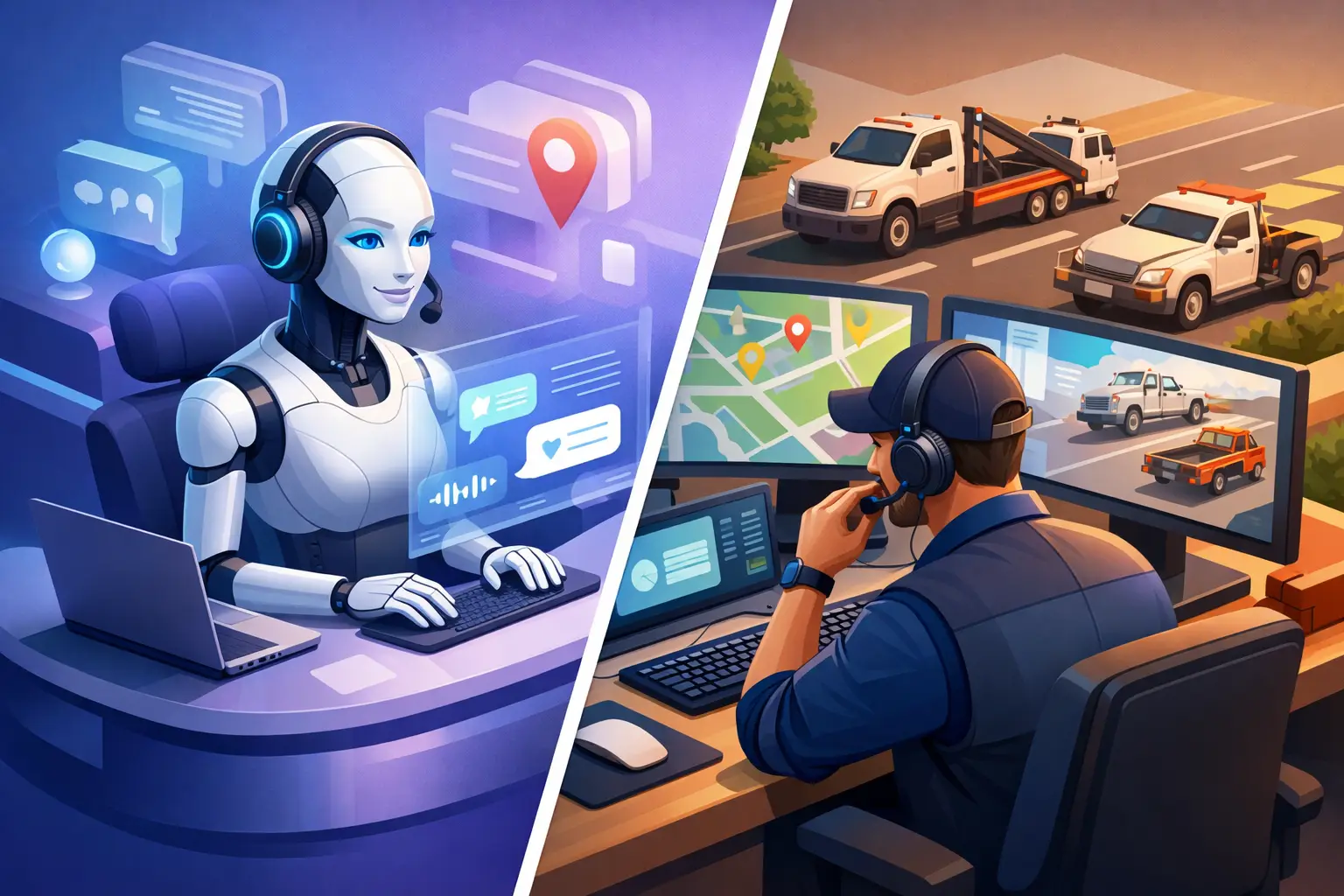
    Learn About how Humans and AI Agents work together here

    Learn more about AI Assisted Towing Dispatch Here

  • Towing Call Answering Service That Works

    Towing Call Answering Service That Works

    At 2:17 a.m., a stranded driver is not comparing brands. They are calling the first towing company that answers. If your shop misses that call, the revenue is gone, the truck stays parked, and the customer moves on. That is why a towing call answering service is not a nice-to-have add-on. It is part of the revenue engine.

    For towing operators, the question is not whether calls need coverage. It is whether the people and systems answering those calls can move work into dispatch fast enough, accurately enough, and with enough control to protect margin. A generic answering service may pick up the phone. That does not mean it can support a towing business.

    What a towing call answering service actually needs to do

    A real towing environment is messy by nature. Calls come in from private customers, police rotations, body shops, motor clubs, apartment complexes, lenders, and impound customers who are already frustrated before the phone rings. Some need a tow right now. Some need a release answer. Some need storage yard directions. Some are calling back because another dispatcher gave incomplete information.

    A towing call answering service has to sort those situations correctly in real time. It needs to capture location details without slowing the call down, identify the service type, collect vehicle data, route priority calls properly, and make sure the job enters the workflow cleanly. If the service only takes a message and promises a callback, you are not solving the main problem. You are just delaying it.

    The best setup behaves like an extension of dispatch operations, not a receptionist desk. It should follow your call flows, your routing rules, your service area boundaries, and your escalation logic. If your business handles impounds one way after hours and roadside calls another way, that needs to be built into the process from day one.

    Why general answering services fall short

    On paper, many answering services look similar. They promise 24/7 coverage, live agents, message taking, and overflow support. For towing, that is rarely enough.

    The gap shows up in the details. A non-specialized agent may not know the difference between a private property impound call and a roadside lockout. They may fail to ask whether the customer is in a safe location, whether the vehicle is all-wheel drive, whether the caller has a motor club ticket number, or whether the release question should be handled by storage staff rather than dispatch. Those misses create bad jobs, repeat calls, and wasted truck movement.

    There is also a cost issue that owners sometimes underestimate. Cheap call coverage can become expensive if it increases average handle time, causes data entry errors, or forces your in-house team to clean up every intake. Labor does not really go down if your dispatchers spend half their shift fixing bad call notes.

    This is where specialization matters. Towing has its own vocabulary, urgency patterns, and customer expectations. A provider that understands those conditions will make better routing decisions and hand off cleaner information.

    The operational case for hybrid answering and dispatch

    The strongest model for most towing companies is not purely human and not purely automated. It is hybrid.

    AI can answer instantly, capture standard information, manage repetitive call types, and maintain after-hours coverage without the staffing drag of overnight scheduling. Human dispatch expertise still matters when the call is emotional, unusual, high-risk, or tied to a complex service rule. The value comes from combining speed with judgment.

    That balance matters because towing calls are not uniform. A simple roadside jump start request can follow a tight script. A police impound inquiry, a complaint call, or a motor club escalation cannot always do that. Operators need a system that can move routine work efficiently while still getting a trained person involved when the situation calls for it.

    For small to mid-sized fleets, this model often closes a painful gap. They need 24/7 responsiveness, but not every shop can justify full overnight staffing or absorb dispatcher turnover without service slipping. A hybrid towing call answering service gives coverage without giving up oversight.

    What to look for in a towing call answering service

    First, look at workflow depth, not just answer rates. If a provider says it handles towing calls, ask what happens after the greeting. Can it collect vehicle details accurately? Can it distinguish impound inquiries from active tow requests? Can it route by geography, call type, customer class, or time of day? Can it support escalations when a caller is upset or a job falls outside normal policy?

    Second, look at system integration. If your calls are being answered in one place and your jobs are being entered somewhere else hours later, friction will build fast. Clean intake only matters if it turns into dispatch action. For operators already using Towbook, this is especially important. The closer the call handling process is tied to your existing dispatch workflow, the less time your team wastes on duplicate entry and correction.

    Third, look at accountability. You want visibility into call outcomes, not a black box. That means clear call handling logic, measurable response performance, and enough transparency to know whether calls are being resolved, routed, or parked. A service partner should help tighten operations, not create another layer you have to manage blindly.

    Where the ROI usually shows up

    Most owners first think about labor savings. That is fair, especially when overnight phones are expensive to staff and hard to cover consistently. But labor is only one line in the return.

    The bigger gain is often call capture. If your business misses even a small number of after-hours roadside or tow requests each week, the lost revenue adds up quickly. Add the softer costs of poor customer experience, delayed dispatch, and repeat inbound volume from people who did not get clear answers the first time, and the real number gets larger.

    There is also a utilization effect. Better call intake means better truck assignment. Better truck assignment means less wasted movement and fewer jobs that need to be reworked because the original information was incomplete. Over time, that improves responsiveness without necessarily adding trucks.

    That said, ROI depends on your mix of work. A company doing mostly scheduled transport will measure value differently than a business heavy in emergency roadside and police rotation. The right provider should understand that the model needs to fit your call volume, service mix, and operating hours.

    Common scenarios that separate strong providers from weak ones

    After-hours coverage is the obvious one. If a customer calls when your office is closed, can the service answer immediately, collect the right information, and launch the next step without confusion? This is where many operators either recover revenue or lose it.

    Impound calls are another test. These callers often need specific information, and they are often upset. A poor answer creates repeat calls, front desk pressure, and complaints. A good process gives clear, policy-based responses and routes exceptions correctly.

    Motor club work has its own demands. Ticket numbers, ETAs, status updates, and service verification have to be handled consistently. If your answering partner cannot stay disciplined on that process, margin gets squeezed by callbacks and administrative drag.

    Complaint handling matters too. Not every service partner is equipped for it, but towing companies deal with emotionally charged calls. An answering service that can de-escalate, document accurately, and route to the right person protects both staff time and reputation.

    Implementation matters more than the sales pitch

    A towing call answering service can sound great in a demo and still fail in practice if onboarding is shallow. The provider needs to map your call types, escalation paths, coverage windows, service area, truck capabilities, and software workflow. If that setup is rushed, the service will feel generic no matter how strong the technology looks.

    This is one reason specialized providers tend to outperform broad BPO-style vendors. They know which questions matter before the first call goes live. They also know that the process will need tuning once real traffic starts coming through.

    For operators who want tighter control without adding more in-house dispatch overhead, a towing-focused model makes a real difference. Towing Forward, for example, centers the service around towing-specific call logic, AI-supported answering, human dispatch support, and Towbook-connected workflow instead of generic message taking. That is the kind of structure that helps the phones feed the operation instead of slowing it down.

    The right answer is not always replacing your dispatch team. Sometimes it is covering nights. Sometimes it is overflow. Sometimes it is fixing the intake side so your current staff can work faster. What matters is that the service fits the way your business actually runs.

    If your phones are still treated like a front-office task instead of a dispatch function, that is usually the first place to tighten operations. Better call handling does more than answer faster. It gives your trucks a better chance to stay moving, your team a better chance to stay focused, and your business a better chance to keep the calls you already paid to earn.

    References

    To see a short video about Towing forward, click here.
    📅 Or book a quick demo by clicking here

  • Towing Dispatch Cost Savings That Actually Stick

    Towing Dispatch Cost Savings That Actually Stick

    At 2:13 a.m., the real cost of dispatch is not just the wage on the schedule. It is the call that rings too long, the roadside job entered late, the impound release question that ties up a dispatcher, and the truck that sits five extra minutes waiting for direction. Towing dispatch cost savings come from fixing those operational leaks, not just paying someone less to answer the phone.

    For towing companies, dispatch is one of the fastest places to gain margin or lose it. Owners usually feel the pain in a few obvious ways – overnight payroll, constant retraining, missed calls, and inconsistent response times. But the bigger issue is that dispatch touches every revenue-producing part of the business. If intake is slow, trucks roll late. If data entry is inconsistent, invoices lag. If call handling breaks down after hours, the lost revenue never shows up on a report because the job was never captured.

    Where towing dispatch cost savings really come from

    The most reliable savings usually come from four areas: labor efficiency, higher call capture, faster truck assignment, and better use of existing software. The reason many companies miss these gains is simple. They look at dispatch as a staffing problem when it is really a workflow problem.

    Take labor first. In-house dispatch coverage often gets built around worst-case availability rather than actual call patterns. That leads to expensive overnight coverage, overtime, or managers stepping in to fill gaps. On paper, the team is covered. In practice, the operation is paying premium labor dollars for uneven performance.

    Then there is call capture. A missed call at noon is frustrating. A missed call after hours is expensive. If your company handles police towing, roadside assistance, private property work, or motor club volume, one dropped call can mean a lost job, a damaged relationship, or both. That means dispatch cost is not only what you spend. It is also what poor coverage prevents you from earning.

    Speed matters too. A dispatcher who has to ask the same qualifying questions every time, search for unit status manually, or re-enter details into Towbook is adding cost to every job. Those minutes multiply across the day. Saving three to five minutes per call does not sound dramatic until you spread it across dozens or hundreds of monthly transactions.

    Why cheap dispatch often becomes expensive

    A lot of towing companies try to cut dispatch expense by hiring the lowest-cost option available. Sometimes that means a lightly trained overnight person. Sometimes it means an answering service that does not understand towing. Sometimes it means pushing more call volume onto office staff who already have billing, releases, and customer service work to handle.

    The short-term math can look attractive. The operational math usually does not.

    Dispatch in towing is not generic phone support. It requires call control, truck awareness, location accuracy, customer de-escalation, job-type recognition, and software discipline. A dispatcher has to know the difference between a standard roadside call and an impound-related inquiry that needs a completely different path. They need to recognize when a motor club call has to be entered a certain way, when a complaint needs escalation, and when a truck should not be interrupted because the current job is more time-sensitive.

    If that knowledge is missing, the company pays somewhere else. Jobs get delayed. Drivers call in asking for clarification. Office staff clean up incomplete records. Management spends time reviewing mistakes instead of running the business. Cheap coverage becomes expensive because the errors spread across the operation.

    The staffing model matters more than the hourly rate

    If you want real towing dispatch cost savings, start by looking at coverage design instead of individual payroll lines. Many towing businesses carry full in-house coverage when they only need full in-house control during peak hours.

    That does not mean every company should outsource all dispatch. It means the right model depends on call volume, service mix, geography, and software discipline. A smaller operator with inconsistent overnight volume may save the most by moving after-hours call handling off the owner’s plate. A multi-truck fleet may benefit more from a hybrid structure where internal staff handle high-volume daytime dispatch and a specialized partner covers nights, overflow, and overflow-related data entry.

    This is where the trade-off matters. Full in-house dispatch can give you direct supervision, but it also brings turnover risk, staffing gaps, and uneven shift quality. Full outsourcing can reduce labor complexity, but only if the provider actually understands towing workflows. A hybrid model often creates the best balance because it lowers labor cost without giving up control over escalation rules, routing logic, or software visibility.

    Process discipline creates savings faster than headcount cuts

    Owners often ask how many dollars can be saved by reducing dispatcher hours. That is a fair question, but the faster gains usually come from standardizing what happens on every call.

    When intake follows a defined flow, calls move quicker and errors drop. The dispatcher confirms service type, location, vehicle details, billing source, and priority level in the same order every time. The job enters the system cleanly. Routing rules point it to the right queue or truck. Drivers get fewer clarification calls. Office staff spend less time repairing bad records.

    That is operational savings, and it tends to stick because it is built into the process.

    The same applies to software. A lot of towing companies are paying for systems they only use halfway. If Towbook or a similar platform is in place, but dispatchers are still relying on side notes, memory, or text-message updates, the company is wasting both software investment and labor time. Better workflow integration reduces duplicate entry, speeds status updates, and improves visibility across the board.

    Towing dispatch cost savings after hours are often the biggest win

    After-hours coverage is where the numbers usually get more obvious. Night and weekend dispatch creates a hard choice for many operators. Either pay premium labor to maintain coverage, rotate internal staff into a role they do not want, or accept weaker responsiveness during lower-volume windows.

    None of those options is ideal.

    The right after-hours setup can lower cost while improving performance. That sounds aggressive, but it happens because the comparison is not just one wage against another. It is total coverage cost against total operational output. If after-hours calls are answered consistently, entered correctly, and routed using towing-specific rules, the company can reduce missed revenue while also lowering the management burden that comes with overnight staffing.

    For fleets that handle impounds, police work, roadside assistance, and motor club traffic, this matters even more. Those calls are not interchangeable. The intake path, urgency, and documentation needs are different. A generic service may answer the phone, but if it cannot separate those call types and move them correctly, the savings disappear.

    What to measure if you want real ROI

    If you are evaluating dispatch changes, do not stop at payroll savings. Measure total dispatch performance.

    The most useful indicators are missed call rate, average answer time, jobs captured after hours, time from call to dispatch, data-entry accuracy, driver interruptions, and management time spent covering holes. You should also watch how quickly jobs move from intake to billable record, because dispatch errors often show up later as invoicing delays.

    It also helps to compare cost per handled call instead of just cost per dispatcher. That gives a clearer picture of efficiency, especially if your call volume changes by season or service type.

    One mention here is warranted: companies like Towing Forward are built around this exact measurement mindset. The value is not simply that calls get answered. The value is that dispatch becomes more controllable, more visible, and less expensive per successful job handled.

    When savings are smaller than expected

    There are cases where dispatch savings will be modest at first. If your current team is highly disciplined, your coverage is already matched well to volume, and your software usage is strong, the immediate labor reduction may not be dramatic. But even then, resilience can be the gain. Backup coverage, fewer owner interruptions, more stable after-hours handling, and tighter call flows still protect margin.

    The opposite is also true. If your company has frequent missed calls, dispatcher turnover, owner-covered nights, or inconsistent use of Towbook, the savings potential is usually larger than expected because the operation has hidden waste in several places at once.

    The point is to evaluate dispatch as a system, not a seat in a chair. Every extra minute on intake, every incomplete job record, and every after-hours miss carries cost. Fix enough of those consistently, and the margin improvement becomes measurable very quickly.

    The best dispatch savings are not the ones that look good for one month. They are the ones that keep trucks moving, keep calls from slipping through, and give you tighter control of the operation without adding more management weight to your day.

    To learn how missed calls affect customer satisfaction, Click Here

    To see a short video about Towing forward, click here.
    📅 Or book a quick demo by clicking here